
Japan Cherry Blossom Forecast 2026: The Ultimate Digital Nomad Guide
Sakura season is arguably the most magical time to be in Japan. For digital nomads, it offers a unique opportunity to work remotely while experiencing one of the world's most celebrated natural phenomena. This guide provides everything you need to plan your 2026 cherry blossom experience.
2026 Cherry Blossom Forecast Overview
According to the Japan Meteorological Corporation's January 2026 forecast, this year's cherry blossom season is expected to arrive earlier than average across most of Japan. Temperatures are predicted to be normal in January-February but warmer than usual in March-April. (Check the timeline at the top of this page for detailed dates.)
Data source: Japan Meteorological Corporation (January 2026)
The Best Viewing Window for 2026
For nomads planning to base themselves in central Japan, the optimal window is March 29 to April 7, 2026. This period covers full bloom across Tokyo, Kyoto, Osaka, and surrounding areas.
Regional Timeline
- Late January - February: Kawazu cherry blossoms (early-blooming variety) in Izu Peninsula
- Late March: Tokyo, Nagoya, and surrounding Kanto/Chubu regions
- Early April: Kyoto, Osaka, Nara (Kansai region)
- Mid-April: Kanazawa, Nagano, Tohoku region
- Late April - Early May: Hokkaido
Top Cherry Blossom Spots for Digital Nomads
Tokyo
- Shinjuku Gyoen (¥500 entry): A massive garden with 1,000+ trees. No alcohol allowed, making it peaceful for daytime work breaks. Multiple cafés nearby.
- Ueno Park: Over 1,000 cherry trees. Very crowded but iconic. Best visited early morning (before 8am).
- Chidorigafuchi: Stunning moat views near the Imperial Palace. Night illuminations available. Rowboat rentals (¥800/30min).
- Meguro River: 4km of cherry trees along the river. Great evening atmosphere with food stalls.
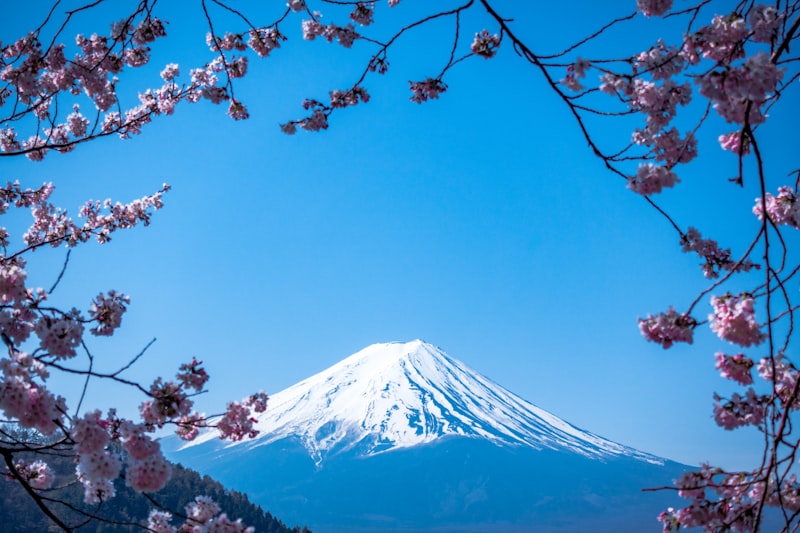
Kyoto
- Philosopher's Path: 2km walkway lined with 500 cherry trees. Quiet mornings, crowded afternoons.
- Maruyama Park: Famous weeping cherry tree (shidarezakura). Free entry, open 24 hours.
- Kiyomizu-dera: Temple views with cherry blossoms. Arrive before 7am to avoid crowds.
- Nijo Castle: Over 400 trees across 50 varieties. Night illuminations recommended.
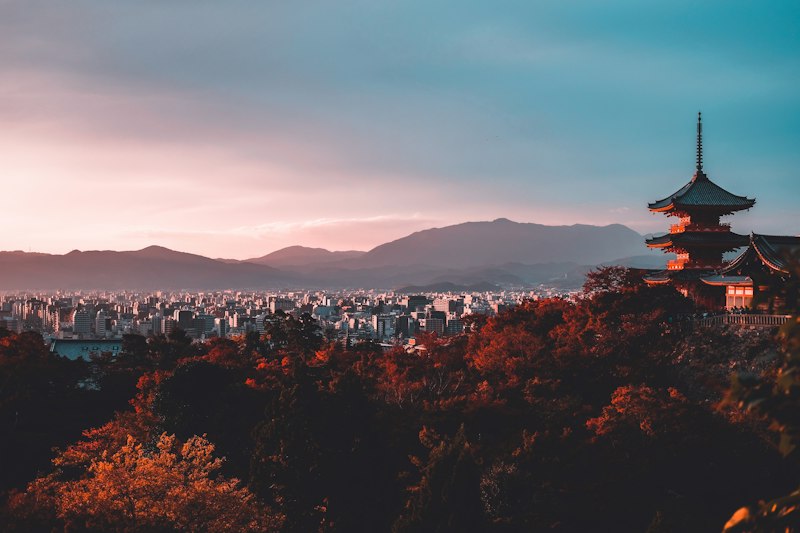
Osaka
- Osaka Castle Park: 4,000+ cherry trees surrounding the castle. Perfect for daytime picnics.
- Kema Sakuranomiya Park: 4.2km of trees along the Okawa River. Less touristy than castle area.
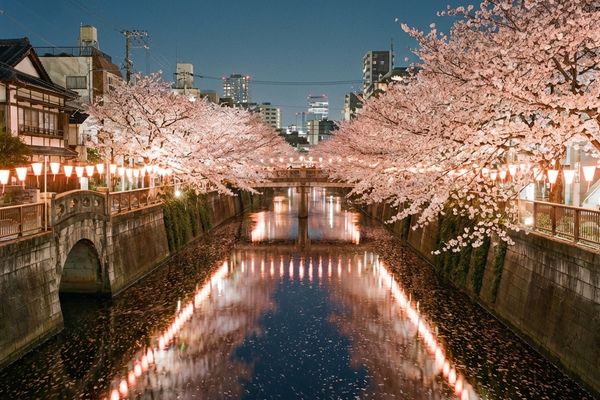 ▲ Meguro River at night: Tokyo's iconic evening hanami experience with food stalls
Practical Tips for Nomads
Booking Strategy
Cherry blossom season is peak tourism. Book 6-9 months in advance for:
- Accommodations (especially in Kyoto)
- Shinkansen reserved seats for inter-city travel
- Popular restaurants
Avoiding Crowds
| Strategy | Details |
|---|---|
| Timing | Visit spots before 8am or after 5pm |
| Day of week | Weekdays are significantly less crowded |
| Location swap | Choose second-tier cities (Kanazawa, Kochi, Nagano) |
| Off-peak blooms | Target early or late-blooming varieties |
Working During Sakura Season
- Outdoor work: Many parks have wifi-friendly cafés nearby, but expect noise and crowds
- Coworking spaces: Maintain your regular workspace routine, then enjoy hanami after work
- Time management: Block 2-3 hours for early morning viewing, work the rest of the day
Weather Considerations
- Temperature: Daytime 12-18°C, evenings 5-10°C
- Rain: April averages 10 rainy days in Tokyo—check forecasts daily
- Wind: Strong winds can accelerate petal fall, shortening peak viewing
Hanami Etiquette
Hanami (花見) is the tradition of enjoying cherry blossoms. Follow these customs:
- Claim space early: For group picnics, arrive before noon to secure a spot
- Use a tarp: Blue plastic tarps are standard (available at 100 yen shops)
- Clean up: Take all trash with you
- Respect barriers: Some trees are roped off—don't cross for photos
- No branch touching: Never shake or pull branches
Budget Planning
| Item | Thrifty | Standard | Premium |
|---|---|---|---|
| Hanami supplies | ¥500 (conbini) | ¥2,000 | ¥5,000+ (catered) |
| Park entry fees | ¥0-500 | ¥500-1,000 | ¥1,000-2,000 |
| Night illumination | ¥0 (free spots) | ¥500-1,500 | ¥2,000+ (premium) |
| Day trip transport | ¥2,000 | ¥5,000 | ¥15,000+ |
Beyond Somei-Yoshino
While Somei-Yoshino (the standard pale pink variety) dominates forecasts, Japan has over 200 cherry varieties:
- Kawazu-zakura (河津桜): Early bloomer (February), deeper pink
- Shidarezakura (枝垂桜): Weeping cherry, peaks 1 week later
- Yaezakura (八重桜): Double-petaled, blooms mid-April
- Goshiki-zakura (御衣黄): Rare green-yellow flowers, late April
Conclusion
For digital nomads, cherry blossom season offers more than just beautiful views—it's a chance to experience Japanese culture at its most vibrant. With proper planning around the 2026 forecast, you can balance productive remote work with unforgettable sakura experiences.
The key is flexibility: weather can shift bloom dates by a week in either direction. Stay updated with apps like Weathernews Sakura and the Japan Meteorological Corporation forecast.